Good dog care
Who’s Walking Who? 5 Ways to Make Dog Walks Better
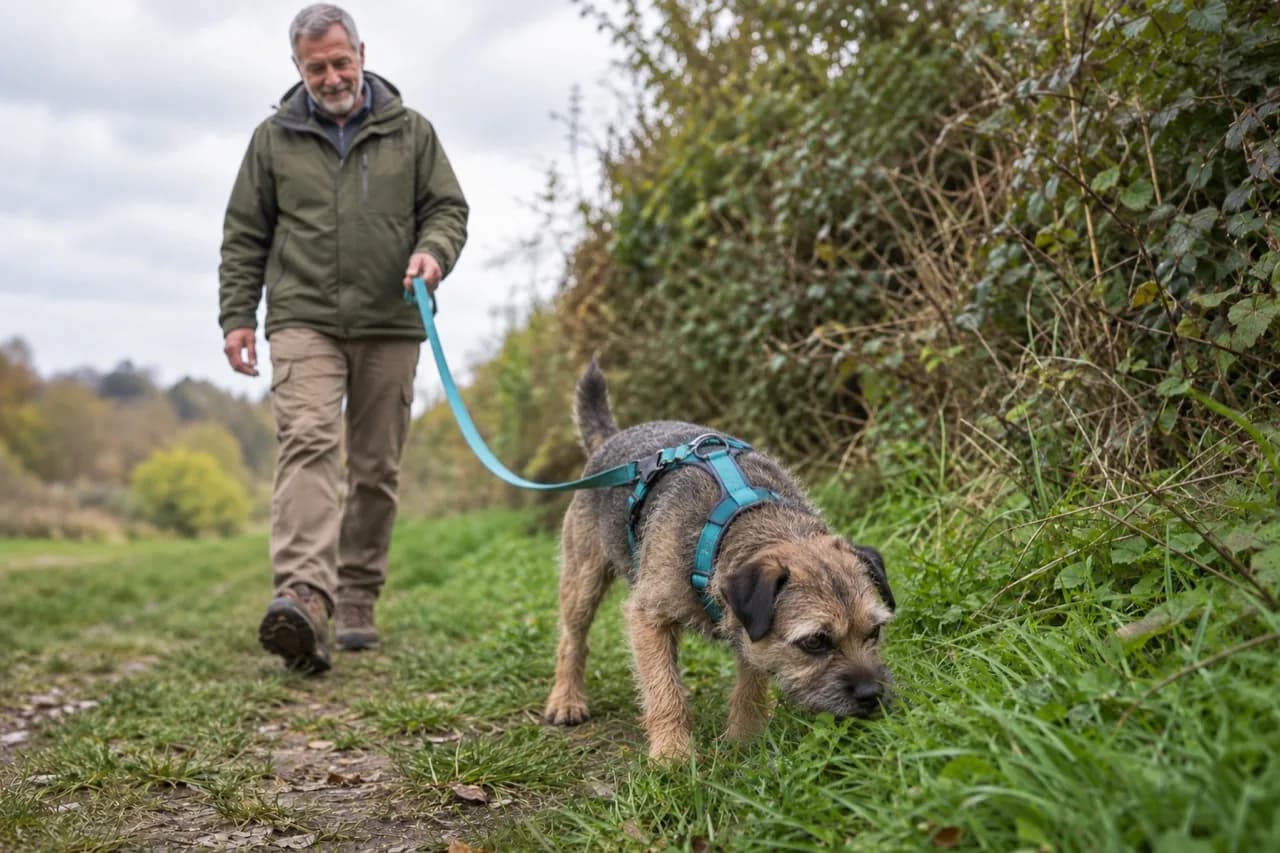
Dog walks can easily become another job on the daily list. Lead on, quick lap around the usual route, lead off, done.
But for your dog, that walk could be the most exciting part of the day.
It’s their chance to explore, investigate, exercise and spend time with their favourite person. A few small changes can turn even the most familiar route into a proper adventure.
Here are five ways to make your next walk better for both of you.
1. Let your dog lead sometimes
Who is walking who?
We’re not suggesting handing over complete control and being dragged through the nearest hedge. But every walk doesn’t need to follow a strict route at your pace.
Let your dog stop and sniff. Give them time to investigate. If it’s safe, let them choose the occasional turn or decide which path to explore.
Sniffing is basically your dog catching up on the local news. Who has been here? Which neighbourhood cat crossed the path? What exactly happened near that very interesting lamppost?
You might see an ordinary pavement. Your dog sees a story unfolding one scent at a time.
2. Don’t measure every walk in miles
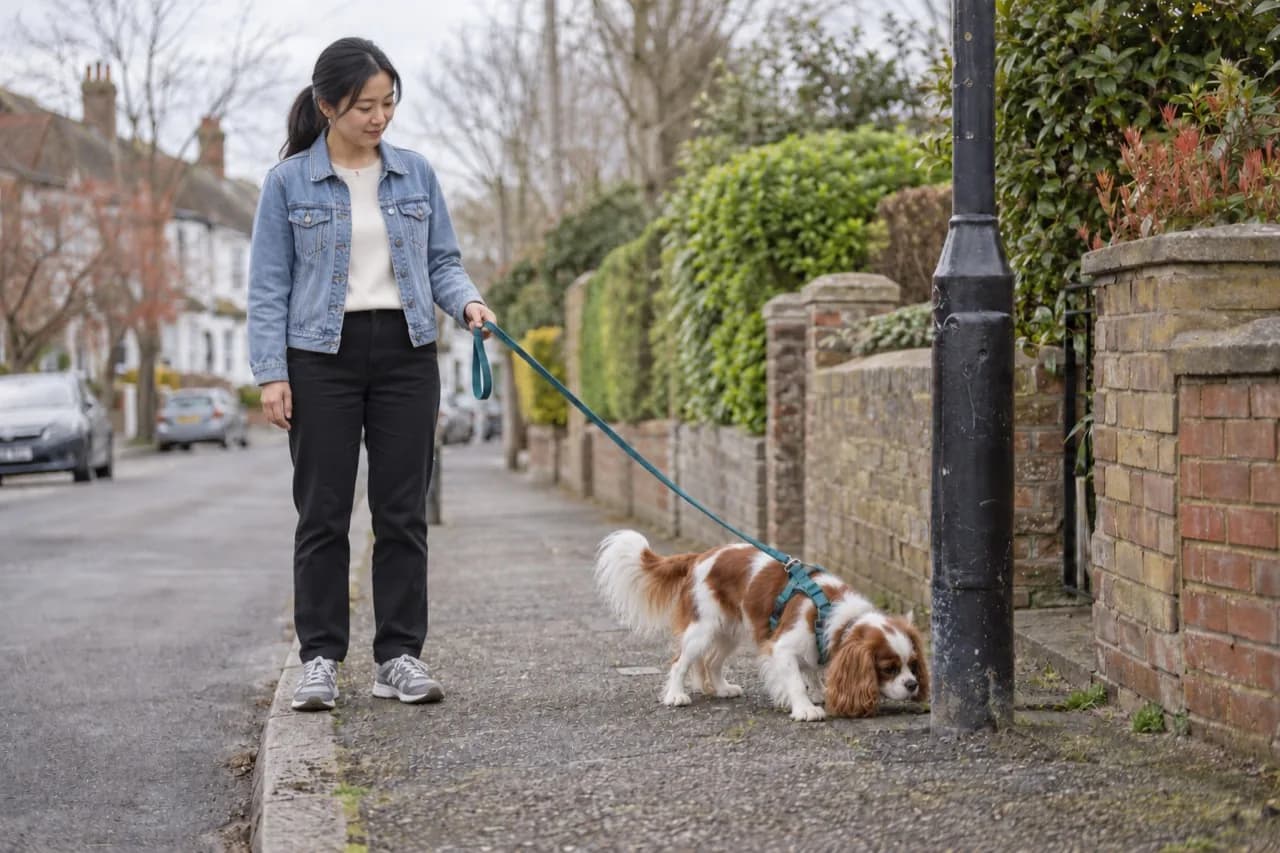
The same route might feel boring to you, but it can be completely different for your dog each time.
There are new smells, sounds, people and dogs to notice. Yesterday’s quiet corner might be today’s most fascinating spot.
That’s why a short, relaxed “sniffari” can be a rewarding part of your dog’s day. Give them time to investigate that hedge properly. It might be the neighbourhood group chat.
Sniffing complements physical exercise. Your dog’s overall activity still needs to suit their age, breed and health, as PDSA explains in its exercise guidance. Make room for both movement and a good nose around.
The best walk isn’t always the longest one. It’s the one your dog gets to enjoy.
3. Give other dogs space
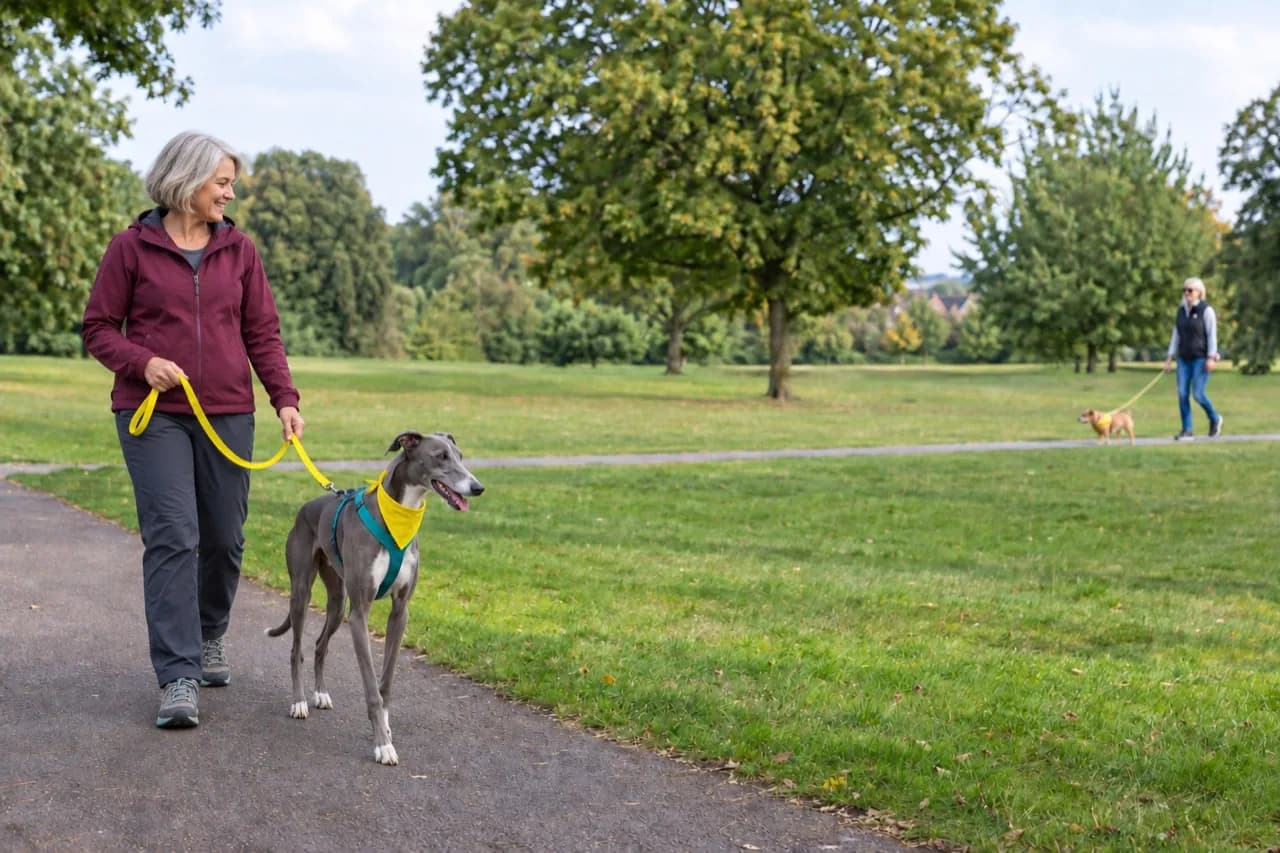
Not every dog wants to say hello.
Some dogs are nervous or reactive. Others might be recovering from an operation, getting used to rescue life, working through training or simply enjoying a quiet walk.
Give others room before things get crowded. Take a wider route, pause at a comfortable distance or cross the road if it’s safe. Keep your dog close enough to prevent an uninvited greeting.
If another owner changes direction or moves away, respect that space. They may be doing exactly what their dog needs.
You may also see a dog wearing a yellow lead, ribbon, bandana or jacket. Through campaigns such as Yellow Dog UK, yellow is used to signal that a dog needs extra space. It isn’t a system everyone knows or uses, so no yellow accessory doesn’t mean an invitation to say hello.
Ask from a distance before approaching, and respect the answer. A little space can make a big difference.
Did you already know about the yellow dog signal?
4. Pack treats and water
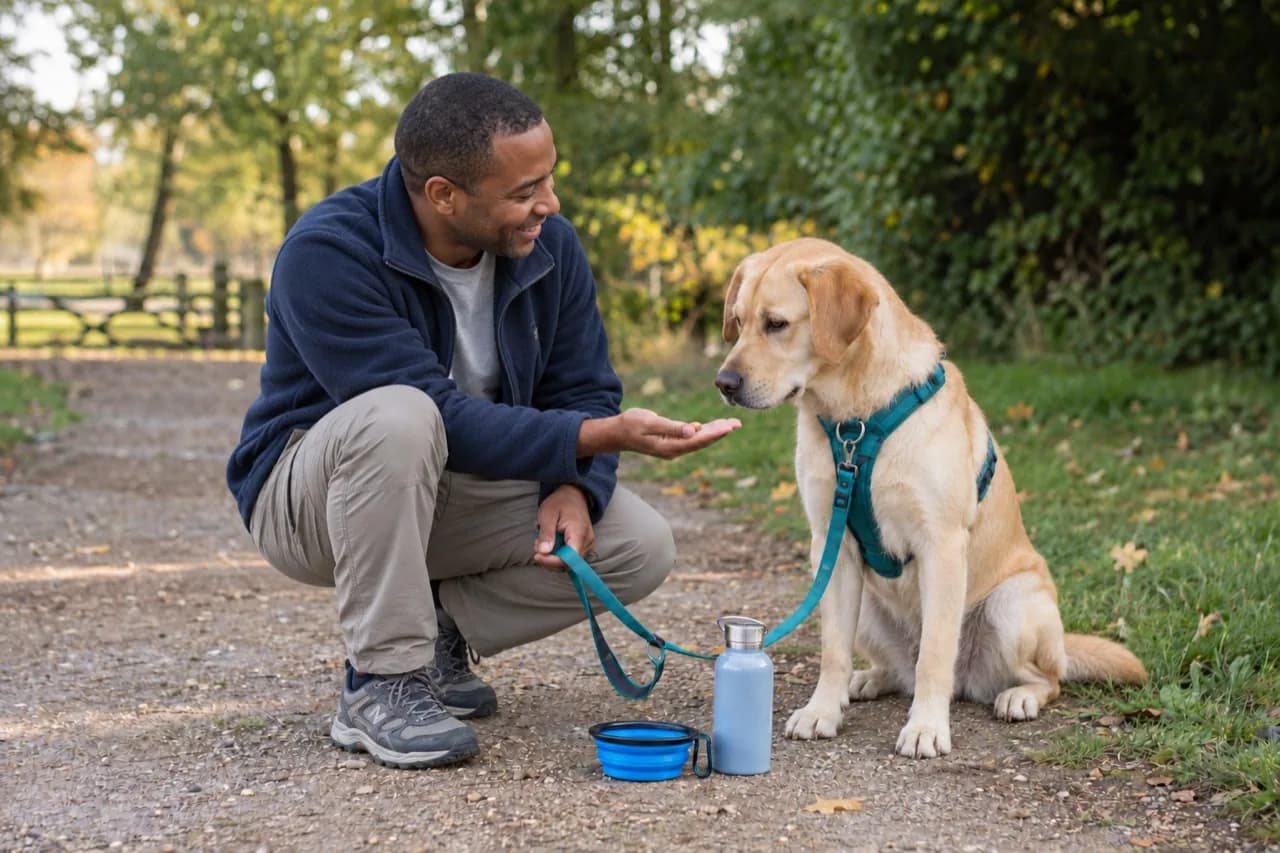
A pocketful of treats can turn an everyday walk into a simple training session.
Reward your dog for checking in with you, walking calmly, waiting at the road or returning when called. You don’t need to make the entire walk feel like a lesson. A few positive moments along the way can help reinforce good habits.
Pack fresh water and a portable bowl too, especially for warmer days or longer routes. Water breaks belong in every season.
Treats, water and poo bags: the dog-walking essentials trio.
5. Put the phone away
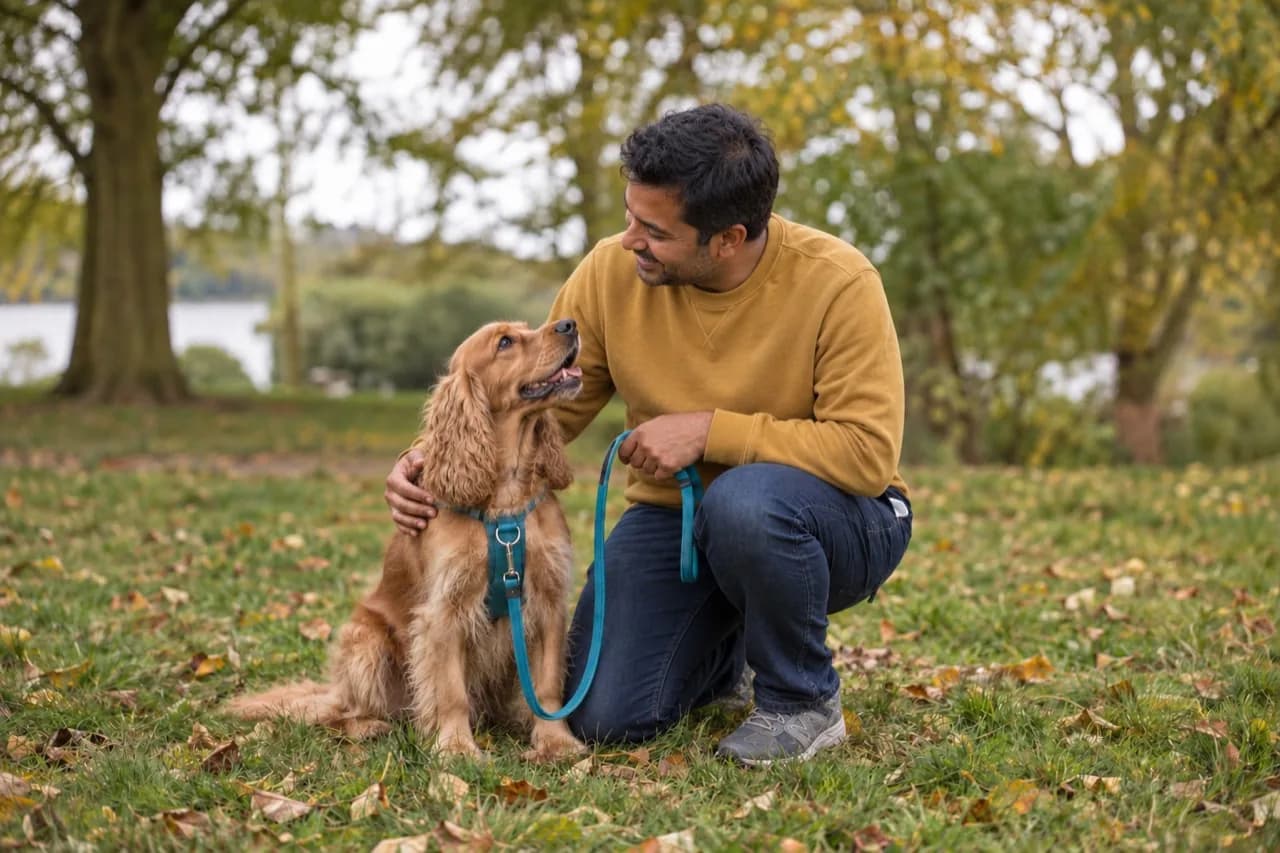
Here comes the controversial one.
Put your phone in your pocket. Try leaving the headphones at home for a walk. Your dog has probably lined up a full programme of hedge inspections anyway.
Talk to your dog. Watch what they notice. Let yourself slow down and enjoy being outside together.
They might not answer back, but dogs are excellent listeners. They’re also very good at reminding us to pay attention to what’s happening right now.
Maybe that’s part of the reason we call them our best friends.
Make the walk theirs too
A good dog walk doesn’t need perfect weather, expensive equipment or a carefully planned route.
Sometimes it just needs a little more patience, a few treats and the freedom to stop at that incredibly important patch of grass.
So, on your next walk, slow down and see where your dog takes you.
Who knows? They might have planned a better route.
What’s the one thing your dog always insists on doing during a walk?
Related articles
Good dog care
The first meet & greet: a calmer start for dogs and humans
A practical, unhurried guide to meeting a new dog walker — what to ask, what to notice, and how to leave with a plan everyone understands.
Read storyFinding your walker
How much does dog walking cost in the UK?
Compare UK dog walker rates, understand solo and group prices, budget for regular walks, and decide when a premium service is worth considering.
Read story